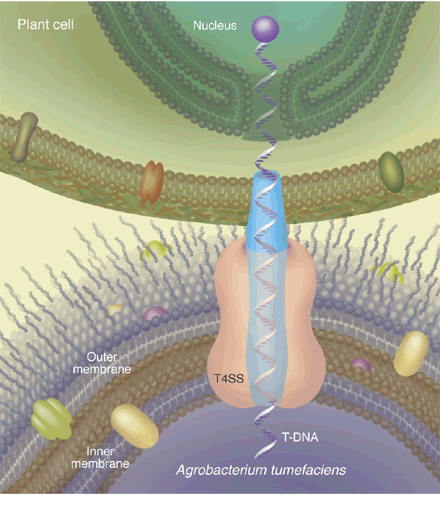
A
TrIP through the type IV secretion channel. The bacterial type IV secretion
apparatus is localized predominantly at the pole of bacteria. In A. tumefaciens,
this machinery mediates the translocation of bacterial T-DNA across both the
inner membrane and outer membrane and injects the T-DNA into plant cells where
it becomes integrated into the host cell genome. Virulence factors encoded by
the T-DNA induce tumorlike growths (crown gall disease) in host plants. Science
Volume 304, Number 5674, Issue of 21 May 2004, p. 1122.
Bacteria
have evolved a series of cleverly constructed machineries that mediate the passage
of proteins and DNA across their cell envelopes and into the extracellular milieu.
The complexity of these transporters is especially apparent in Gram-negative
bacteria, which are enclosed by two membranes (see the figure). Although the
additional outer membrane offers a semipermeable barrier to protect these organisms
from harmful substances, it also poses an obstacle that the bacteria must overcome
to send materials to the outside environment. Consequently, transport mechanisms
in Gram-negative bacteria require multicomponent structures that are organized
into intricate machineries that often span both the inner and outer membranes.
Possibly the most familiar example of such an apparatus is the conjugation machinery,
a multiprotein complex that facilitates the transfer of genetic material from
one bacterial cell to another. In the natural environment, this form of horizontal
gene transfer promotes genetic diversity and survival. The discovery of conjugal
transfer in the 1940s revolutionized microbial genetics, and has been widely
exploited to transmit plasmids and selectable markers between bacterial strains.
Although extremely useful in laboratory settings, the spread of antibiotic resistance
between pathogens in clinical situations has made the treatment and control
of infectious diseases extremely challenging (1). Overall, the directed delivery
of materials from bacterial cells has been one of the most useful, and yet one
of the most worrisome phenomena, in the field of microbiology.